← Back to desk3 min ride
Dispatch
10 Epic Coastal Cliffs
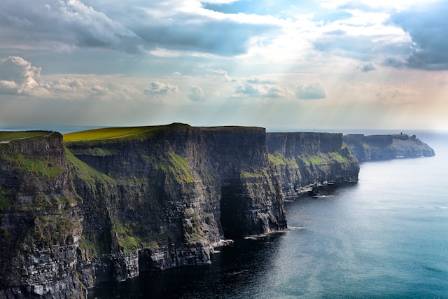
Stretching for eight kilometers along Ireland's County Clare, the Cliffs of Moher soar almost 120 meters above the Atlantic Ocean. Just offshore stands Branaunmore, a 67-meter sea stack that erosion has separated from the mainland. Hosting over 20 species of seabirds, such as puffins, these cliffs are recognized as a Special Protection Area by the European Union.
L
Layla Rogers
Rider
Desk note
Full dispatch and transfer tips sit below.
Line
Blue Line Walk
The Cliffs of Moher
Stretching for eight kilometers along Ireland's County Clare, the Cliffs of Moher soar almost 120 meters above the Atlantic Ocean. Just offshore stands Branaunmore, a 67-meter sea stack that erosion has separated from the mainland. Hosting over 20 species of seabirds, such as puffins, these cliffs are recognized as a Special Protection Area by the European Union.
Étretat's Cliffs
The small agricultural village of Étretat in northwestern France is home to spectacular coastal scenery. Its layered white and gray cliffs, which overlook the English Channel, are distinguished by striking natural arches and a slender, needle-shaped rock formation known as "L'Aguille" that emerges from the sea. These dramatic landscapes served as a muse for famous Impressionist artists like Claude Monet and Henri Matisse.
The Cliffs of Bonifacio
Perched atop the limestone cliffs of southern Corsica, France, the town of Bonifacio is the location of an ancient Tuscan fortress established in the 9th century. These renowned white cliffs provide a stunning overlook of a bustling harbor and the nearby Lavezzi and Cerbicale islands. Carved directly into the rock face is the historic King of Aragon’s Staircase, a 187-step passage linking the upper town to a grotto beneath.
The Twelve Apostles
Situated off the coast of Australia's Port Campbell National Park is a collection of limestone pillars called the Twelve Apostles. These impressive coastal structures were shaped by prolonged erosion, which first created caves in the retreating headland, then arches, and finally, collapsing structures that became standalone stacks up to 45 meters tall. Only seven of the original "Apostles" remain today, as the relentless erosion continues.
The White Cliffs of Dover
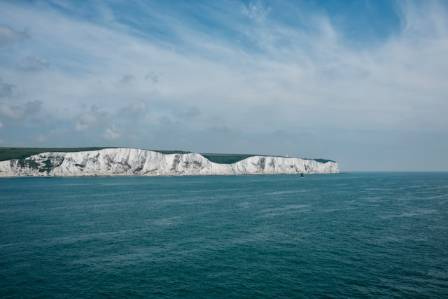
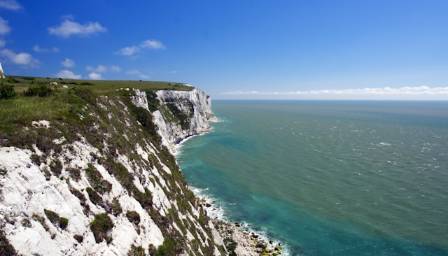
Facing continental Europe from the English coast, the iconic White Cliffs of Dover are composed of chalk. These fine-grained limestone formations developed over millions of years from the accumulated calcium carbonate remains of microscopic algae that settled on the seafloor during the Cretaceous period. For an unparalleled vista, visitors can ascend the steps of the nearby South Foreland Lighthouse.
Mizen Head
The rugged cliffs of Mizen Head in County Cork, Ireland, gaze out onto the vast Atlantic Ocean and mark the nation's most southwesterly extremity. A key feature is the Mizen Foot Bridge, suspended 45 meters above the waves and spanning 52 meters to Cloghane Island. The waters beneath the cliffs support a diversity of marine life, including dolphins, seals, and whales.
Big Sur
The stunning coastal bluffs and valleys of Big Sur extend approximately 145 kilometers along California's central shoreline. This wild and scenic terrain is traversed by the legendary Highway One, which snakes along the borders of the Santa Lucia Mountains and provides breathtaking overlooks of the Pacific Ocean. The area is abundant with colorful wildflowers and serves as a habitat for the majestic California condor.
Navagio Beach
Found within a secluded inlet on the Greek island of Zakynthos, Navagio Beach is surrounded by magnificent limestone cliffs that tower above its white sands and turquoise waters. Commonly called Shipwreck Beach, it is known for the decaying hull of the MV Panagiotis, a freight vessel that was stranded during a storm in 1980. The cliff tops are a favored launch point for BASE jumpers, who parachute down to the shore.
The Bunda Cliffs
Bordering the Great Australian Bight for about 100 kilometers, the Bunda Cliffs form one of the world's most extensive, unbroken sea cliff coastlines. These limestone walls, rising up to 120 meters, originated 65 million years ago when the Australian continent separated from Antarctica. The area around the cliffs is inhabited by diverse wildlife, ranging from dingoes and wild camels to Australian sea lions.
The Paracas Cliffs
The Paracas Peninsula in Peru is renowned for the Paracas Candelabra, a 180-meter prehistoric geoglyph etched into its northern slope, but it also features striking and beautiful coastal cliffs. Located within the protected Paracas National Reserve, these seaside cliffs are formed from pink granodiorite. As this rock erodes, it tints the beaches with a distinctive deep red color.
Nearby stops
 STOP
· en
Easy Ways to Make Your Bedroom Extra Cozy
Chloe Ramsey
 STOP
· en
The Best RV for Large Families
Noah Mitchell
 STOP
· en
The 10 Most Beautiful Aircraft Ever Built
Evander Wynne
 STOP
· en
How to Grow and Care for a Rubber Tree Plant
Ezra Bennett
 STOP
· en
4 Serene Getaways for the Ultimate Peace and Relaxation
Sarah
 STOP
· en
Sea Surface Salinity
Lillian Ashcroft