Dispatch
A Closer Look at Hyacinths
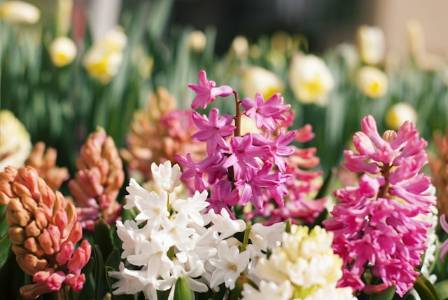
People often say that our sense of smell is strongly connected to memories, and few flowers demonstrate this better than hyacinths. Catching the fragrance of a blooming hyacinth can instantly bring back memories of spring celebrations, family gatherings, and colorful flower displays from childhood. The sweet scent of these spring bulbs has a special ability to create lasting emotional connections.
Carter Flynn
Rider
Desk note
Full dispatch and transfer tips sit below.
Line
Blue Line Walk
People often say that our sense of smell is strongly connected to memories, and few flowers demonstrate this better than hyacinths. Catching the fragrance of a blooming hyacinth can instantly bring back memories of spring celebrations, family gatherings, and colorful flower displays from childhood. The sweet scent of these spring bulbs has a special ability to create lasting emotional connections.
Because hyacinths bring so much seasonal beauty, many people become curious about their origins. These familiar garden flowers did not begin in flower beds or indoor pots. Their story starts in the wild, where they developed unique ways to survive and reproduce.
The True Hyacinth Species
Although many plants are commonly called hyacinths, there are actually only a few true members of the genus Hyacinthus today. The genus contains just three recognized species: Hyacinthus litwinovii, Hyacinthus transcaspicus, and the most widely known species, Hyacinthus orientalis.
Many other plants that carry the name “hyacinth” are not closely related and only share the name. Hyacinths were once classified as members of the lily family (Liliaceae), but modern genetic research has placed them in the asparagus family (Asparagaceae).
Where Hyacinths Come From
All true hyacinth species are native to regions around the eastern Mediterranean, the Middle East, and parts of southwestern Asia.
Because these areas cover a wide geographic range, wild populations of hyacinths can differ significantly from one another. For example, Hyacinthus orientalis includes many recognized variations and possible subspecies.
Over centuries of cultivation, humans have spread hyacinths far beyond their original habitats. Today, they can be found growing naturally in many regions where they have become established. In the wild, these plants usually prefer cooler climates, higher elevations, and loose, well-draining soils.
Life Inside a Bulb
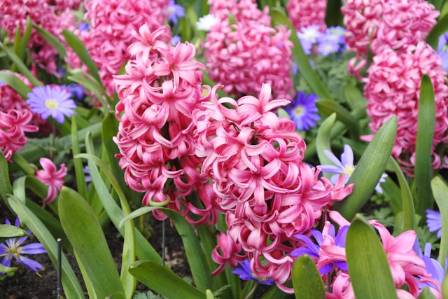
Like many spring-flowering plants, hyacinths grow from underground bulbs. For most of the year, the plant remains hidden beneath the soil, waiting for warmer spring temperatures to signal the beginning of active growth.
Once conditions become suitable, hyacinths grow rapidly. Their leaves and flower structures are already formed inside the bulb, allowing them to emerge quickly after winter snow melts and moisture becomes available.
Selective breeding has created countless garden varieties with different flower colors and stronger fragrances, but wild hyacinths are also impressive in their natural form.
Wild Hyacinth Flowers and Pollination
In nature, hyacinth flowers usually appear in smaller numbers compared with cultivated varieties. Their colors range from pale white and soft blue to deeper shades of purple.
The strong fragrance that people love is not only a result of gardening efforts. Wild hyacinths naturally produce aromatic compounds that attract pollinators. These scents help guide insects toward the flowers, where they receive small amounts of nectar as a reward.
Bees are believed to be the primary pollinators of hyacinths in both their native environments and areas where they have been introduced.
How Hyacinths Spread Through Seeds
After flowering, hyacinths produce fruits known as capsules. When these capsules mature, they open and release many seeds.
Each seed has a small, nutrient-rich structure called an elaiosome attached to it. This special feature attracts ants, which collect the seeds and carry them back to their colonies.
The ants are not interested in the seed itself but rather in the elaiosome. After eating this attachment, they discard the seed, often placing it in waste areas inside the colony. This provides the seed with a safe place to grow away from many predators.
Surviving Winter Underground
After completing their growth and reproduction cycle, hyacinths return to their underground bulb stage.
These plants have developed a fascinating adaptation that helps protect their bulbs from freezing temperatures. During the growing season, hyacinths produce special contractile roots that slowly shorten and pull the plant deeper into the soil.
This downward movement is especially useful in loose soils that freeze easily. By positioning the bulb safely below the surface, hyacinths can avoid extreme cold and remain dormant until spring arrives again.
Appreciating Hyacinths in a New Way
Learning how familiar garden plants survive in the wild can make us appreciate them even more. Hyacinths are not just beautiful spring flowers with a pleasant fragrance; they are plants with remarkable adaptations, fascinating histories, and unique relationships with their environment.
The next time you see a blooming hyacinth, take a moment to admire not only its colors and scent but also the incredible natural story behind this beloved flower.
Nearby stops
 STOP
· en
Top 12 Most Reliable Cars
Frank
 STOP
· en
Facts on the Peach Blossom Flower
Isla Monroe
 STOP
· en
Top 10 Coastal Gems in Thailand: Unveiling the Best of Thai Beaches
Jackson Carter
 STOP
· en
Microchips technology
Dylan Shaw
 STOP
· en
The largest known terrestrial gastropod is the giant African land snail.
Liam Thompson
 STOP
· en
The Eiffel Tower: From Eyesore to Icon
Megan Foster