Dispatch
Facts You Might Not Know About Rabbits
Rabbits are among the most popular small pets in the world, but many people do not realize how unique their behaviors, needs, and biology are. From their unusual digestive system to their impressive jumping ability, rabbits have many fascinating traits. Here are some surprising facts about these adorable animals.
Addison Blake
Rider
Desk note
Full dispatch and transfer tips sit below.
Line
Blue Line Walk
Rabbits are among the most popular small pets in the world, but many people do not realize how unique their behaviors, needs, and biology are. From their unusual digestive system to their impressive jumping ability, rabbits have many fascinating traits. Here are some surprising facts about these adorable animals.
Rabbits Can Live for 12 Years or More
Many people believe rabbits only live for about five years, but this is often an underestimate caused by misunderstandings about their care requirements and the idea that they are only suitable as children’s pets.
With proper nutrition, a safe environment, and regular care, rabbits can live much longer. Many healthy rabbits reach 7 to 10 years of age, and some smaller breeds may live up to 12 years or even longer.
Rabbits Need Social Companionship
Rabbits are naturally social animals, and living with another rabbit can greatly improve their happiness and overall well-being. A bonded rabbit companion provides friendship, warmth during colder months, and help with grooming areas that are difficult for them to clean themselves, such as around the eyes.
A neutered male and female pair is often considered an ideal combination, but any rabbits can live happily together if they are neutered and properly introduced. When enough space is available, rabbits can also be kept in larger groups.
Although some people recommend keeping rabbits with guinea pigs, this is not usually the best choice. The two species have different dietary needs, and rabbits may accidentally harm or dominate guinea pigs. A guinea pig also cannot replace the natural social relationship that exists between two rabbits.
Rabbits Are Natural Recyclers
Rabbits have a special digestive habit that allows them to gain the maximum amount of nutrients from their food. They produce a type of soft dropping called caecotrophs, which contains valuable protein and vitamin B.
Unlike normal droppings, caecotrophs are softer, shinier, and have a stronger smell. Rabbits usually eat them immediately, so owners rarely notice them.
If a rabbit leaves behind many caecotrophs, it may indicate a dietary problem or difficulty reaching its rear area. In such cases, veterinary advice may be needed.
Their Teeth Grow Continuously
A rabbit’s teeth never stop growing throughout its lifetime. To keep them at a healthy length, rabbits need a diet rich in grass and hay.
Chewing hay naturally wears down their teeth because of both the constant chewing motion and the slightly abrasive texture of plant material. Without enough hay, rabbits can develop serious dental problems, including overgrown teeth and sharp points that can injure their gums and tongue.
Dental disease is one of the most common health issues seen in rabbits.
Muesli-Style Rabbit Food Can Create Poor Eating Habits
Some commercial rabbit foods made in a muesli style can encourage unhealthy selective eating. Rabbits often choose only their favorite pieces while leaving behind important nutrients.
These types of food may also fail to provide enough chewing activity, which is necessary for maintaining healthy teeth. A balanced rabbit diet should focus mainly on hay rather than mixed food products.
Carrots Are Not a Main Part of a Rabbit’s Diet
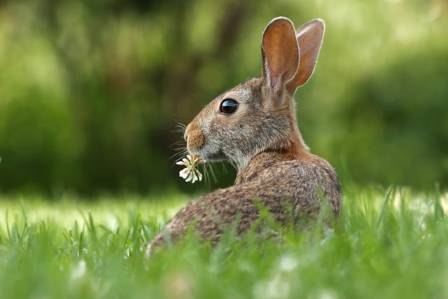
Although cartoons often show rabbits eating carrots, root vegetables are not actually a natural staple food for them. Carrots contain a lot of sugar and should only be offered occasionally as a small treat.
The majority of a rabbit’s diet should consist of hay, making up about 80%. Fresh vegetables should provide around 15%, while high-quality pellets should only account for about 5%.
Rabbits Drink Large Amounts of Water
Rabbits require constant access to fresh water. A small rabbit weighing about two pounds may drink a similar amount of water each day as a much larger dog weighing around ten pounds.
Water bowls are often better than bottles because they are easier for rabbits to drink from, simpler to clean, and less likely to become blocked.
Fresh water should be provided daily, and bowls or bottles should be cleaned regularly.
Rabbits Cannot Vomit
Rabbits are very clean animals and groom themselves in a way similar to cats. However, unlike cats, rabbits cannot vomit because their digestive system does not allow food to move backward.
When rabbits swallow loose fur during grooming, they rely on eating plenty of fiber to help move the fur safely through their digestive tract.
Rabbits Show Happiness Through “Binkies”
One of the cutest rabbit behaviors is known as a “binky.” This happens when a rabbit feels especially happy and excited.
During a binky, a rabbit jumps into the air while twisting its head and body in different directions. A smaller movement, such as quickly flicking the head or ears, is sometimes called a half-binky and is also a sign of playfulness.
When a rabbit performs binkies, it is showing that it feels comfortable, safe, and content.
Rabbit Body Language Can Be Difficult to Understand
When rabbits feel nervous or stressed, their body language is often very subtle. They may tense their bodies or become still, which can be easy for owners to miss.
Because rabbits naturally hide signs of weakness, it is important to pay close attention to small changes in behavior and watch for possible signs of illness or infection.
Rabbits Need Plenty of Exercise Space
Whether kept indoors or outdoors, rabbits need enough room to move, explore, and behave naturally. They should have opportunities to run, jump, dig, hide, stretch, and stand upright.
Young rabbits raised in cramped spaces may be more likely to suffer from weak bones because they do not get enough movement to develop properly.
A rabbit enclosure should allow the animal to make several hops and fully stretch upward. For many breeds, a suitable living area is around 6 feet long and 2 feet high.
They should also have access to a larger exercise area, ideally around 8 feet long, 6 feet wide, and 3 feet high. Their environment must be secure from dangers such as predators outdoors or electrical wires indoors.
Rabbit Ears Have Many Important Functions
Rabbits are famous for their large ears, which provide them with excellent hearing. Their ears can rotate up to 180 degrees, allowing them to accurately locate the source of sounds.
Their ears also help regulate body temperature. Since rabbits cannot sweat and do not cool themselves by panting like dogs, they release excess heat through the large surface area of their ears.
However, this cooling method is not always enough, so rabbits should always have access to a cool, shaded place during hot weather.
Baby Rabbits Are Born With Closed Eyes
Newborn rabbits enter the world with their eyes shut. After their eyes open, they develop almost complete 360-degree vision, making it difficult to approach them unnoticed.
However, rabbits do have a small blind area directly in front of their faces.
Rabbits Are Surprisingly Fast
Rabbits are excellent runners and can reach speeds of around 18 miles per hour. Their powerful legs also allow them to jump about 3 to 4 feet high and leap more than 9 feet horizontally.
Because of their speed and agility, escaped rabbits can be extremely difficult to catch. Owners who allow rabbits outside should ensure fences are tall and secure.
More Than One Million Pet Rabbits Live in the UK
The UK has a large population of pet rabbits, with estimates suggesting around 1.1 million domestic rabbits.
Numbers decreased between 2018 and 2020, reaching approximately 600,000, but the population increased again between 2020 and 2021 as more people spent time working from home and chose rabbits as companions.
With proper care, nutrition, and attention, rabbits can become loving and rewarding long-term pets.
Nearby stops
 STOP
· en
The largest known terrestrial gastropod is the giant African land snail.
Liam Thompson
 STOP
· en
Where Does All The Soil From A Groundhog Burrow Go And How Much Can They Dig
Whitaker Sophie
 STOP
· en
Global Pasta Treasures: 10 Must-Try Dishes from Around the World
Christopher Turner
 STOP
· en
The Last Wild Horse of the Steppes
Vesper Lane
 STOP
· en
A world tour of the most beautiful lighthouses
Reid Lawson
 STOP
· en
The Coolest Kingfishers from Six Continents
Ayla Rose