Dispatch
The Five Best Lighthouses of All the Lighthouses
Lighthouses are among the most fascinating structures ever built. They are simple yet powerful symbols of guidance, safety, and human kindness. Standing against oceans and storms, these towers have protected sailors for centuries while also becoming icons of hope and perseverance.
Tristan Avery
Rider
Desk note
Full dispatch and transfer tips sit below.
Line
Blue Line Walk
Lighthouses are among the most fascinating structures ever built. They are simple yet powerful symbols of guidance, safety, and human kindness. Standing against oceans and storms, these towers have protected sailors for centuries while also becoming icons of hope and perseverance.
Their humanitarian purpose is beautifully illustrated by a story from the late 17th century. During another conflict between France and Britain, French privateers captured engineer Henry Winstanley while he was working on the first lighthouse planned for the Eddystone Rocks near Cornwall. When King Louis XIV learned of the incident, he ordered Winstanley’s release, explaining that France was fighting England, not humanity itself.
Lighthouses also have their own days of recognition. International Light Day is celebrated during the third week of August, while National Lighthouse Day in the United States takes place on August 7. This date commemorates the day in 1789 when the U.S. Congress approved legislation to establish and maintain lighthouses.
The official history of lighthouses is often traced back to the Lighthouse of Alexandria, one of the Seven Wonders of the Ancient World. Built around 280 BCE, it reached an extraordinary height of approximately 110 meters and remained one of the tallest structures on Earth for centuries, surpassed only by the Great Pyramid of Giza. Sadly, earthquakes eventually destroyed it, leaving only ruins by 1323.
Before dedicated lighthouse towers existed, people relied on beacon fires placed on hills and coastal heights to guide ships. Ancient legends even credit Palamedes of Nauplia, a Greek hero associated with the Trojan War, with creating the first lighthouse.
Today, around 20,000 lighthouses stand around the world. Every one of them has its own story, but the following five represent some of the most remarkable examples because of their beauty, history, and cultural significance.
5 – Tourlitis Lighthouse
The Tourlitis Lighthouse looks almost like something from a fantasy world. Its unusual shape and dramatic location make it appear as though it belongs to a wizard’s castle rather than a real coastline. It is easy to imagine a magical lighthouse keeper living inside such a mysterious tower.
Although no wizard has ever been recorded as living there, the lighthouse does occupy a location that could easily fit into ancient Greek mythology. It stands near the Greek island of Andros, a place connected with many legendary stories.
The current lighthouse is a modern reconstruction completed in 1996 after the original structure was destroyed during World War II. The first lighthouse on the site was built in 1897, making it a relatively recent addition compared with many historic lighthouses.
Standing only about 7 meters tall, Tourlitis Lighthouse became Greece’s first fully automated lighthouse after its reconstruction. Despite its small size, its extraordinary appearance has made it one of Greece’s most recognizable coastal landmarks.
4 – Tower of Hercules
The Tower of Hercules earns its place because of both its remarkable appearance and its incredible history. It is not only an impressive lighthouse but also one of the most important surviving structures from the Roman era.
The lighthouse was likely constructed during the reign of Roman Emperor Trajan, who ruled from 98 to 117 CE and was known for ambitious building projects, including roads, bridges, aqueducts, harbors, and famous monuments such as Trajan’s Column and Trajan’s Forum.
Although historical records are incomplete, researchers believe the lighthouse was built during the first or early second century. Over the centuries, it underwent several restorations, with one of the most significant renovations carried out by naval engineer Eustaquio Giannini in 1791.
Located in Galicia, Spain, the Tower of Hercules is the oldest surviving Roman lighthouse and the oldest continuously operating lighthouse in the world. It rises approximately 55 meters high and became automated in 1996.
The name “Tower of Hercules” comes from a medieval legend recorded by King Alfonso X of Castile. According to this story, the Greek hero Hercules defeated the three-headed giant Geryon, buried him beneath the tower, and ordered a lighthouse to be built there as a monument to his victory.
3 – Lindau Lighthouse
The Lindau Lighthouse is a perfect example of classic lighthouse beauty. Its elegant design gives it the appearance of an idealized lighthouse while still including unique architectural details that make it distinctive.
One of its most unusual features is the large clock built into the tower. Although a clock may seem unnecessary for a lighthouse, it adds character and creates an interesting connection between maritime navigation and everyday life.
Located in southern Germany on Lake Constance, the Lindau Lighthouse stands approximately 33 meters tall. It was completed in 1856 and was converted to automatic operation in the early 1990s.
Its graceful appearance, balanced proportions, and picturesque waterfront location have made it one of Germany’s most admired lighthouse structures.
2 – Lime Rock Lighthouse / Ida Lewis Lighthouse
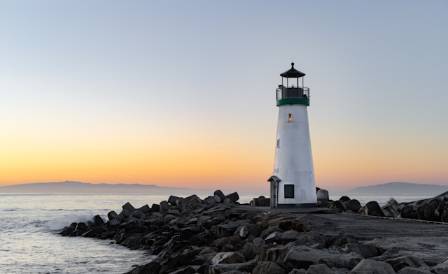
At first glance, the Ida Lewis Lighthouse may not appear as dramatic as towering coastal beacons. However, its importance comes not from its appearance but from the extraordinary story connected to it.
Originally known as the Lime Rock Lighthouse, the structure was renamed the Ida Lewis Lighthouse in 1924 in honor of one of America’s most famous lighthouse keepers.
Ida Lewis served at the lighthouse for 54 years. Her father was originally the official keeper, but after suffering a stroke only a few months after the family arrived, Ida took on many of the responsibilities. Later, after her father’s death, her mother became keeper, and Ida eventually received the official position herself in 1879. She became the highest-paid female lighthouse keeper in the United States.
During her lifetime, Ida Lewis became internationally famous for rescuing people from dangerous waters. Her first rescue occurred when she was only 12 years old, saving four men after their boat overturned. Her final rescue came when she was 63.
Her most famous rescue happened during a snowstorm when she rowed through dangerous conditions without a coat or shoes to save two soldiers who were clinging to their overturned boat.
When critics suggested that rescue work was unsuitable for a woman, Ida responded that only “a donkey” would consider saving lives to be unfeminine.
The lighthouse itself is modest, standing only about 4 meters tall. Built in 1854 in Rhode Island, USA, it was automated in 1927. Despite its small size, its association with Ida Lewis makes it one of the most meaningful lighthouses in history.
1 – Bell Rock Lighthouse
Bell Rock Lighthouse is one of the most extraordinary lighthouses ever constructed. Its appeal comes from its elegant design, Scottish heritage, and the incredible engineering challenge involved in building it.
The lighthouse became widely known partly because of the famous painting by J.M.W. Turner. After seeing the artwork, many people became interested in the real lighthouse behind the image and discovered a structure with an extraordinary story.
The reason for building Bell Rock Lighthouse was the dangerous reef beneath the North Sea. The rocks were hidden underwater for most of the day and only appeared briefly during low tide. Their sharp surfaces caused numerous shipwrecks every winter.
For many years, construction was considered too expensive and difficult. The problem only received urgent attention after a Royal Navy ship struck the reef. The disaster highlighted the need for a permanent warning system, especially after the tragic loss of HMS Victory, where all 496 people aboard died.
The plan was extremely ambitious: constructing a lighthouse on a reef located 11 miles from the Scottish mainland that was underwater for about 22 hours each day.
Engineer Robert Stevenson developed innovative solutions for the project. He was sometimes confused with the famous writer Robert Louis Stevenson, but the two were different people. Stevenson spent years studying the site and searching for someone willing to take him to the dangerous reef.
The project was later placed under engineer John Rennie, who contributed to the design, although historical debates continue regarding the exact contributions of both men. Ultimately, Stevenson oversaw the actual construction and worked directly with the builders on the reef.
Construction progressed slowly because Stevenson refused to use explosives, fearing damage to the rock foundation. Workers relied mainly on hand tools, and they could only work during the short periods when the reef was exposed above the water.
After two years, the lighthouse had risen less than two meters. However, once the foundation was completed, construction accelerated, and the tower was finally finished after four years of work.
Today, Bell Rock Lighthouse is more than 200 years old. Despite constant exposure to powerful North Sea waves, it has required remarkably little maintenance. It is widely regarded as one of the finest lighthouses ever built.
Since its construction, only two ships have been lost on the reef. HMS Argyll sank during a wartime blackout in 1915, while the cargo ship Rosecraig was lost in 1908. Fortunately, neither disaster resulted in any deaths.
Located in the North Sea near Arbroath, Scotland, Bell Rock Lighthouse stands 30 meters tall and became fully automated in 1988. It remains a symbol of engineering excellence and the life-saving power of human innovation.
Nearby stops
 STOP
· en
The 10 Most Beautiful Aircraft Ever Built
Evander Wynne
 STOP
· en
Historic Town of Guanajuato and Adjacent Mines
Lydia Spencer
 STOP
· en
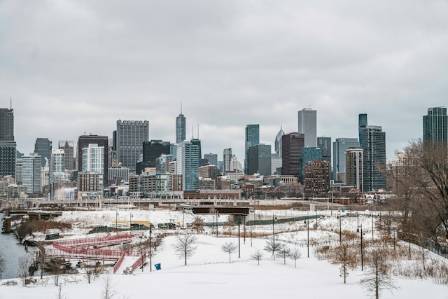
Winter Wonderland: the dreamiest winter landscapes in the world
Theron Vale
 STOP
· en
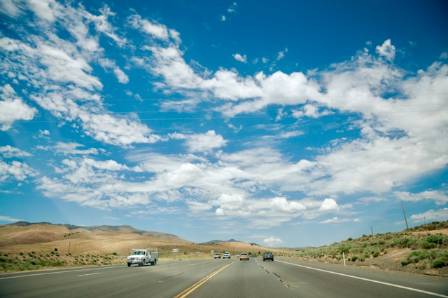
The Most Epic Road Trips in the World: A Traveler’s Driving Guide
Daniel Lee
 STOP
· en
Creating Watercolor Dolphin Art with Dual Brush Markers
Nava
 STOP
· en
The Most Popular Hat Styles of the 21st Century
Joren Wade