← Back to desk3 min ride
Dispatch
The Curious World of Koalas
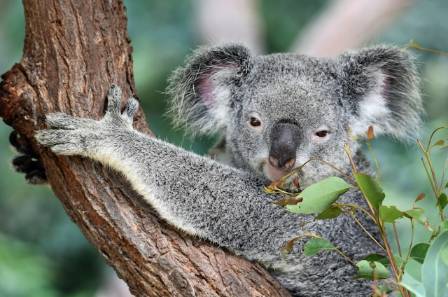
A Name That Means “No Water” The term koala likely originates from the Dharug language of Aboriginal Australians, meaning "no water." This makes perfect sense in the wild, where these marsupials get almost all their moisture from eucalyptus leaves. While they can drink from water sources, it's an uncommon sight—usually occurring during heatwaves or drought conditions.
M
Marin Hayes
Rider
Desk note
Full dispatch and transfer tips sit below.
Line
Blue Line Walk
A Name That Means “No Water”
The term koala likely originates from the Dharug language of Aboriginal Australians, meaning "no water." This makes perfect sense in the wild, where these marsupials get almost all their moisture from eucalyptus leaves. While they can drink from water sources, it's an uncommon sight—usually occurring during heatwaves or drought conditions.
Thriving on a Toxic Menu
Koalas are dietary specialists, relying almost exclusively on eucalyptus leaves, which are toxic to most other animals. Their bodies are finely tuned to handle these poisonous compounds, thanks to unique liver enzymes and bacteria in their digestive tract. On average, a koala can consume nearly a kilogram of leaves daily.
Adapting to a Parched Land
Australia’s landscape is largely arid or semi-arid, and koalas have evolved accordingly. They are native only to Australia and are typically found along the eastern and southeastern coastlines. These creatures inhabit eucalyptus-dominated forests and woodlands, especially near streams or other water sources in the drier interior.
The Last of Its Lineage
There is only one species of koala alive today—Phascolarctos cinereus. It is the sole surviving member of its family, with its nearest relatives being wombats. Current population estimates hover around 300,000 individuals, and unfortunately, numbers continue to decline.
Not a Bear, But a Marsupial Cousin
Despite the misleading nickname "koala bear," these animals are marsupials, not bears. They're closer kin to kangaroos and wombats. Female koalas raise their young—called joeys—in a front-facing pouch where the underdeveloped infant continues to grow after birth.
Solitary by Nature
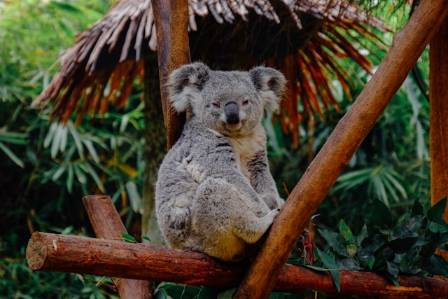
Koalas generally prefer a solitary lifestyle. While they can inhabit overlapping ranges, most adults live alone except during mating season. Once juvenile koalas mature, they seek out their own territories in the treetops, continuing a life mostly apart from others.
Guided by Scent
These marsupials possess an exceptional sense of smell, which they use to select the best leaves and detect territorial markings. Their large, sensitive noses help them identify eucalyptus leaves with the lowest toxin content and highest moisture.
Masters of Rest
To conserve energy in their nutrient-poor diet, koalas spend much of their day sleeping—up to 20 hours. Curled into the fork of a tree, they rest to manage the metabolic demands of processing fibrous and toxic leaves.
Lifespans Among the Branches
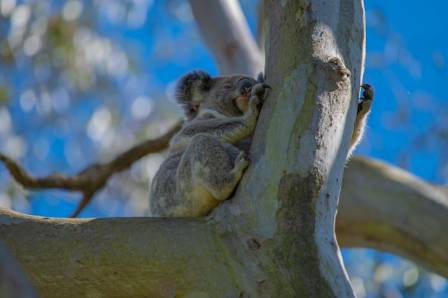
Koalas live an average of 10–15 years in the wild. Males tend to be larger and display a chest scent gland, while females often live longer. The differences in size and longevity are part of their unique biology and role in reproduction.
A Species Under Pressure
Koalas are facing increasing environmental challenges. Habitat destruction, disease, and extreme weather events such as bushfires have severely impacted their numbers. The catastrophic fires of 2019–2020 highlighted just how vulnerable these iconic animals are, with significant habitat loss and widespread casualties.
A Glimpse Into Their World
From their sleepy routines to their toxic diet, koalas are fascinating creatures with highly specialized lifestyles. But with rising threats to their existence, understanding and protecting them has never been more urgent.
Nearby stops
 STOP
· en
Canvas Painting for Beginners
Liam Spencer
 STOP
· en
Top 8 Mountains to Climb
Christina
 STOP
· en
Embarcadero waterfront at night
Corwin Rhodes
 STOP
· en
What Are the Best Beaches Near Seattle?
Gabriella Montrose
 STOP
· en
History of the Pont Neuf
Amelia Clarke
 STOP
· en
Mastering the Depths: A Comprehensive Guide to Underwater Art
Stephen Andrew Thornton