Dispatch
The Historical Impact of Sculptures: Defining Human Milestones
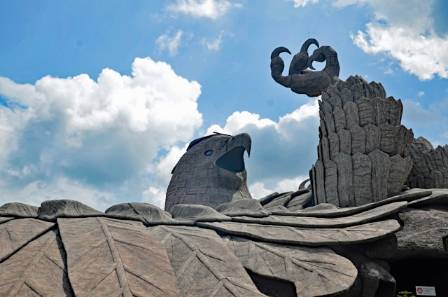
Sculptures have long served as a profound medium for documenting cultural, historical, and artistic triumphs. Across millennia, these three-dimensional masterpieces have functioned as enduring monuments to human ingenuity and craftsmanship. Unlike other art forms, sculptures possess a physical presence that captures the essence of their subjects—their emotions, ideologies, and societal values—allowing them to act as silent narrators of our shared past.
Paul Jackson
Rider
Desk note
Full dispatch and transfer tips sit below.
Line
Blue Line Walk
Sculptures have long served as a profound medium for documenting cultural, historical, and artistic triumphs. Across millennia, these three-dimensional masterpieces have functioned as enduring monuments to human ingenuity and craftsmanship. Unlike other art forms, sculptures possess a physical presence that captures the essence of their subjects—their emotions, ideologies, and societal values—allowing them to act as silent narrators of our shared past.
As we examine the trajectory of sculptural history, we see how these works have transitioned from ancient religious icons to monumental tributes and contemporary installations. By exploring these milestones, we can better understand how art preserves the spirit of human achievement for successive generations.
Ancient Statuary and Its Cultural Foundations

The history of sculpture is deeply intertwined with the development of human civilization. In regions such as Mesopotamia, Ancient Egypt, and the Indus Valley, early works were primarily ceremonial, crafted from stone, wood, or clay to represent deities and sovereigns. These objects were not merely decorations; they were vital tools for communication and religious devotion, designed to inspire awe and preserve the values of the era.
Ancient Greece elevated this art form to unprecedented levels of realism and anatomical precision. The "Nike of Samothrace," or "Winged Victory," remains one of the most significant examples of this mastery. Created in the 2nd century BCE, this marble figure captures the goddess of victory in a dynamic pose, her garments seemingly wind-swept. It serves as a prime example of how ancient sculptors could imbue cold stone with a sense of movement and triumph.
During the Middle Ages, sculptures continued to carry heavy religious weight but also began to function as political instruments. The "Gates of Paradise" by Lorenzo Ghiberti, featuring intricate bronze reliefs of biblical scenes, exemplified the Renaissance transition while still rooted in medieval devotion. Meanwhile, rulers used monumental carvings to assert their authority, often depicting themselves as larger-than-life figures to legitimize their sovereign power.
Mastery of Form During the Renaissance
The Renaissance marked a pivotal era of artistic rebirth, characterized by a renewed fascination with classical Greek and Roman techniques. Sculptors of this period sought to move beyond the stylized forms of the Middle Ages, focusing instead on anatomical accuracy and emotional depth. Marble became the hallmark medium, favored for its ability to hold fine detail and mimic the texture of human skin and muscle.
Michelangelo’s "David" stands as perhaps the quintessential achievement of this period. Standing at 17 feet, the marble hero is rendered with such precision that the viewer can perceive the tension in his veins and muscles. Beyond its technical brilliance, the statue became a symbol of civic pride for Florence, embodying the Renaissance ideal of human potential and physical beauty.
Other masters like Donatello and Bernini further expanded the boundaries of the medium. Donatello was a pioneer in capturing psychological depth, as seen in his early bronze "David." Later, Bernini introduced a sense of theatricality and drama to sculpture. His "Ecstasy of Saint Teresa" uses marble to depict a moment of spiritual rapture, demonstrating an expert command of movement and intense emotion that paved the way for the Baroque style.
Monumental Tributes to Historical Figures
Throughout history, large-scale sculptures have been utilized to immortalize individuals who shaped the course of nations. These monuments do more than replicate a likeness; they serve as physical symbols of national identity and collective memory.
The Statue of Liberty in New York Harbor is a primary example of a sculpture defining a historical ideal. Designed by Frédéric Auguste Bartholdi and gifted by France, it has functioned as a beacon of freedom and hope for millions. Similarly, Nelson’s Column in London’s Trafalgar Square stands as a 169-foot tribute to British naval history, topped with a statue of Admiral Horatio Nelson to commemorate his military bravery.
In the United States, Mount Rushmore serves as a massive memorial to the nation’s democratic history. Carved directly into a granite mountain, the 60-foot faces of George Washington, Thomas Jefferson, Theodore Roosevelt, and Abraham Lincoln represent the growth and preservation of the country. These monumental works demonstrate the power of sculpture to turn historical figures into enduring icons of national pride.
Contemporary Expressions and Modern Social Commentary
In the modern era, sculptures have evolved to address the diverse perspectives and social challenges of our time. Contemporary artists often utilize public installations to transform urban environments into accessible galleries, challenging the traditional boundaries of where and how art is experienced.
Works such as Anish Kapoor’s "Cloud Gate" (commonly known as "The Bean") in Chicago or Arturo Di Modica’s "Charging Bull" in New York’s financial district have become modern landmarks. These pieces invite public interaction and often represent the resilience or identity of the cities they inhabit.
Furthermore, many modern sculptors use their work as a vehicle for social commentary. Kristen Visbal’s "Fearless Girl," placed defiantly across from the "Charging Bull," serves as a poignant symbol of gender equality and the power of women in corporate environments. Abstract and conceptual works, like Jeff Koons' "Balloon Dog," continue to push the medium by questioning the definitions of value and the intersection of art and commercialism.
The Lasting Legacy of Sculptures in Society
The impact of sculptures extends far beyond their initial creation. As tangible links to our heritage, they require meticulous preservation and restoration to withstand the passage of time. These efforts allow future generations to connect with their cultural roots and appreciate the craftsmanship of their ancestors.
Sculptures also serve as powerful educational tools. By providing a sensory and three-dimensional experience, they make history more engaging and comprehensible. Whether they are housed in museums or stand in public squares, these works foster dialogue and encourage us to reflect on the struggles and achievements of those who came before us. By celebrating and protecting these artistic treasures, we ensure that the stories they tell continue to inspire and educate for centuries to come.
Nearby stops
 STOP
· en
Flower Arranging Basics: A Beginner's Guide
Skyler Reed
 STOP
· en
Artistic Techniques for Illustrating Farmers Planting Rice in a Paddy Field
Jameson Carter Wells
 STOP
· en
Simplified Liang Pi: A Guide to Authentic Chinese Cold Skin Noodles
Theo Maxwell Hartley
 STOP
· en
How to Make Clay Ornaments
Roman Ellis
 STOP
· en
A Beginner's Guide to Creating Adorable Felt Animals
Rachel Barkowski
 STOP
· en
7 Fascinating Facts About Felt
Ryan