Dispatch
The Biggest Palaces Ever Built
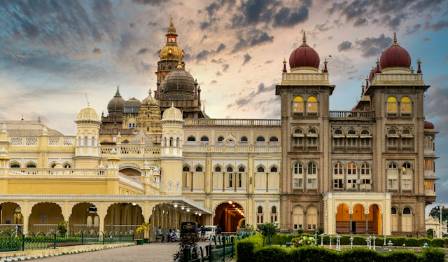
Throughout human history, societies have repeatedly developed systems organized around social and political hierarchies. Those who occupied the highest positions often used enormous displays of wealth and luxury to demonstrate their authority and status. One of the clearest expressions of this power was the construction of immense residences designed for rulers and other members of the elite.
Briar Lennox
Rider
Desk note
Full dispatch and transfer tips sit below.
Line
Blue Line Walk
Throughout human history, societies have repeatedly developed systems organized around social and political hierarchies. Those who occupied the highest positions often used enormous displays of wealth and luxury to demonstrate their authority and status. One of the clearest expressions of this power was the construction of immense residences designed for rulers and other members of the elite.
As civilizations advanced, so did their architectural techniques and construction capabilities. Royal residences became increasingly expansive, elaborate and sophisticated, reflecting not only the wealth and influence of their owners but also the significant divisions that existed within these societies.
Here are seven of the largest palaces ever constructed around the world.
1. The Louvre Palace and Museum
The Louvre in Paris has a history stretching back to the late 12th century, when it was initially constructed as a defensive fortress. Over the following centuries, the complex evolved into a royal and aristocratic residence and continued to expand under successive rulers.
In 1793, the Louvre Museum, originally known as the Muséum central des Arts de la République, opened its doors. Since then, it has developed into one of the world's most important centers for art and culture. The museum currently receives an average of around 30,000 visitors each day, amounting to approximately 10 million visitors annually.
Because the Louvre was constructed and enlarged over many centuries, it incorporates a wide variety of architectural styles. Its continual expansion has resulted in a complex with a floor area of approximately 2,615,630 square feet, or 243,000 square meters. Based on the area of its contiguous buildings, it is considered the largest palace ever constructed.
The Louvre is also the world's largest museum, with approximately 330,000 works of art occupying around 731,945 square feet, or 80,000 square meters, of exhibition and collection space.
One of the most recognizable features of the complex is the Louvre Pyramid at the main entrance. Completed in 1989, the glass pyramid has become an internationally recognized symbol of Paris, comparable in fame to landmarks such as the Eiffel Tower.
2. The Forbidden City
Although the individual buildings within Beijing's Forbidden City are not as large as some of the world's enormous palace structures, the complex remains a strong candidate for the title of the world's largest palace because of its extraordinary scale as an enclosed royal complex.
Located at the center of Beijing, the Forbidden City served as the imperial residence and political center of China's emperors from its construction during the early 15th century until the end of the Qing Dynasty in 1912. The final emperor, Puyi, abdicated that year, bringing centuries of imperial rule to an end.
The entire complex covers approximately 7,836,126 square feet, equivalent to 180 acres or around 728,000 square meters. Today, 980 buildings remain, containing a combined total of 8,886 rooms.
The original complex was said to contain 9,999 and a half rooms. The unusual half-room was connected with the ancient Chinese belief that the god Yù Huáng possessed a palace containing 10,000 rooms, and therefore the imperial palace was deliberately constructed with slightly fewer.
The Forbidden City is now recognized by UNESCO as the world's largest surviving collection of wooden structures. With an estimated value of approximately US$70 billion, it has also been described as the most valuable piece of real estate in the world.
3. The Weiyang Palace
The Weiyang Palace complex was built around 200 BCE and was considerably larger than the Forbidden City. Construction was ordered by Emperor Gaozu of the Han Dynasty and overseen by his prime minister, Xiao He.
At its greatest extent, the palace complex covered approximately 52,272,000 square feet, or about 1,200 acres. This made it almost seven times larger than the Forbidden City and approximately eleven times the size of Vatican City.
The enormous complex did not survive into the modern era. During the early 7th century, Weiyang Palace was destroyed by marauders traveling toward the Tang capital of Chang'an.
The remains are located near present-day Xi'an in Shaanxi province. Very little survives from what must once have been an extraordinary sight for travelers moving along the Silk Road. Despite the limited remains, the historical importance of the site was recognized when it became part of a UNESCO World Heritage Site designation in 2014.
4. Domus Aurea
Following the devastating fire that swept through Rome in 64 CE, Emperor Nero ordered the construction of an enormous private villa complex in the heart of the ancient city. Known as the Domus Aurea, or “Golden House,” the complex extended across substantial portions of the Palatine, Oppian and Caelian hills.
The palace was an extraordinary expression of Nero's taste for luxury and extravagance. Its scale and decoration reflected the immense resources available to the emperor, while also demonstrating the extreme inequality between the ruler and the ordinary population of Rome.
The complex is believed to have stretched for almost a mile from the structures on the Palatine to the edge of the Horti Maecenatis. However, determining its precise dimensions is difficult.
Nero died in 68 CE before construction was completely finished. His successors considered the palace's excessive luxury and scale an embarrassment, and much of the complex was subsequently stripped of its valuable materials and dismantled.
Estimates of the original area vary considerably. Some historians and archaeologists have suggested that it may have covered as much as 300 acres, while more conservative calculations place its size at no more than 100 acres.
Even in an incomplete state, the Domus Aurea would have been an extraordinary complex. It contained enormous halls, gigantic statues, temples and even an artificial lake, creating a palace environment unlike almost anything else in ancient Rome.
5. Hofburg Palace
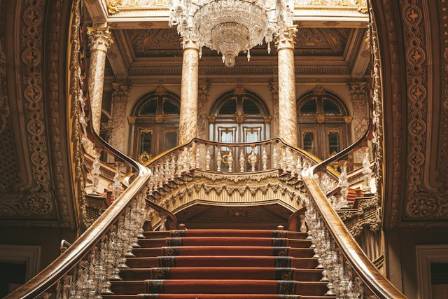
Today, Hofburg Palace serves as both a workplace and residence associated with the president of Austria. Its history, however, stretches back to the 13th century, when it became a residence for Austria's ruling monarchs.
Over the centuries, successive rulers expanded the complex, eventually producing its present floor area of approximately 2,583,339 square feet, or 240,000 square meters.
Hofburg is particularly famous for its role as the official winter residence of the Habsburg dynasty. The enormous complex consists of numerous buildings displaying a wide range of architectural influences, including Baroque, neo-Baroque, Gothic and Rococo styles.
The palace contains 18 wings or groups of buildings, together providing approximately 2,600 rooms arranged around 19 courtyards.
In the modern era, Hofburg serves a wide variety of purposes. The complex contains numerous museums and collections, as well as the Imperial Chapel, where the Vienna Boys' Choir performs every Sunday.
The Weltmuseum operates as an ethnographic museum containing collections devoted to peoples and cultures from outside Europe. Another attraction is the Sisi Museum, which focuses on Empress Elisabeth and presents aspects of aristocratic life in Vienna.
The Austrian National Library and the Spanish Riding School are also located within the Hofburg complex.
6. The Winter Palace
The Winter Palace is one of the most recognizable architectural landmarks in Russian history. It stands beside the Neva River in Saint Petersburg and played a central role in the country's imperial and revolutionary history.
For nearly two centuries, the palace was closely associated with the Romanov dynasty and served as one of the principal seats of imperial power. After the Romanovs were removed from power, the building became the setting for another major chapter in Russian history.
A provisional government headed by Aleksander Kerensky established itself in the palace, but it was unable to halt the growing strength of the Bolshevik movement. In 1917, Bolshevik forces stormed the Winter Palace and arrested the government ministers inside.
Because of these events, the Winter Palace is closely associated with the beginning of the Soviet state.
The palace covers approximately 2,511,705 square feet, or 233,345 square meters, making it broadly comparable in size to both the Louvre and Hofburg Palace. It contains around 1,500 rooms and combines Elizabethan and Russian Baroque influences, with its design intended to convey the grandeur associated with French architectural traditions.
Today, the Winter Palace forms part of the Hermitage Museum, one of Russia's most important institutions for art and culture.
7. Istana Nurul Iman
Istana Nurul Iman is a modern royal palace that serves as the residence of the Sultan of Brunei, Hassanal Bolkiah ibni Omar Ali Saifuddien III, as well as a center of government.
The name can be translated as the “Palace of Light and Faith.” Designed by Filipino architect Leandro V. Locsin, the palace incorporates architectural elements influenced by Islamic and Malay traditions.
With a floor area of approximately 2,152,782 square feet, or 200,000 square meters, Istana Nurul Iman ranks among the largest palaces ever constructed. The complex contains 1,788 rooms, a banquet hall capable of accommodating 5,000 guests, five swimming pools and a mosque with space for approximately 1,500 worshippers.
One particularly notable feature is the palace's collection of 110 garages. These facilities accommodate the sultan's enormous automobile collection of around 7,000 vehicles, which has been valued at approximately US$5 billion.
Istana Nurul Iman is primarily a private residence and is generally closed to visitors, with limited public access available at the end of Ramadan. During Eid-ul-Fitr, which marks the conclusion of the Islamic fasting period, approximately 110,000 people visit the palace over three days.
The palace also welcomes Muslims for prayer gatherings during ten days of Ramadan, despite the month lasting either 29 or 30 days.
The Enduring Grandeur of Palaces
Whatever their historical purpose, palaces have traditionally been built to communicate extraordinary wealth, authority and grandeur. From ancient imperial residences to enormous royal complexes of the modern era, these structures have provided rulers and other powerful figures with a way to display their status through architecture.
Although defining exactly what qualifies as a palace can sometimes be complicated, the tradition of constructing enormous residences for powerful elites has persisted throughout history. As architecture and construction technology continue to evolve, future examples of palatial buildings may well continue this long-standing relationship between enormous homes, wealth and social status.
Nearby stops
 STOP
· en
A Comprehensive Guide to Drawing Chibi Characters and Creating Art Merchandise
Dylan Hawthorne
 STOP
· en
Top 10 facts about polar bears
Grayson Reed
 STOP
· en
Explore earth in 3D
Ruby Ellis
 STOP
· en
Six Common Types of Robots in Daily Life
Trung Tran
 STOP
· en
Why Glass Remains the Premier Choice for Contemporary Skyscrapers
Aurora Grace
 STOP
· en
Global Pasta Treasures: 10 Must-Try Dishes from Around the World
Christopher Turner