← Back to desk3 min ride
Dispatch
Nature’s Optical Illusion: The Copperband Butterflyfish
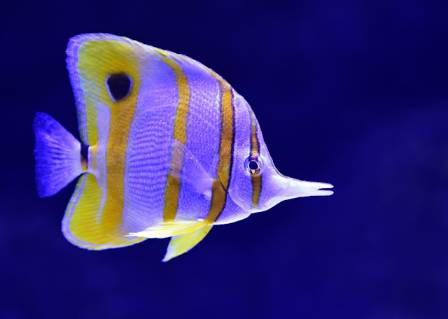
Native to the warm waters of the Indo-Pacific—from the Andaman Sea to the Great Barrier Reef—the Copperband Butterflyfish (Chelmon rostratus) is one of the ocean’s most elegant residents. Typically found in coastal reefs, rocky shorelines, and estuaries at depths of 1 to 25 meters, this species is a favorite among marine enthusiasts for its striking appearance and fascinating survival tactics.
H
Henry Jackson
Rider
Desk note
Full dispatch and transfer tips sit below.
Line
Blue Line Walk
Native to the warm waters of the Indo-Pacific—from the Andaman Sea to the Great Barrier Reef—the Copperband Butterflyfish (Chelmon rostratus) is one of the ocean’s most elegant residents. Typically found in coastal reefs, rocky shorelines, and estuaries at depths of 1 to 25 meters, this species is a favorite among marine enthusiasts for its striking appearance and fascinating survival tactics.
Identification and Physical Traits
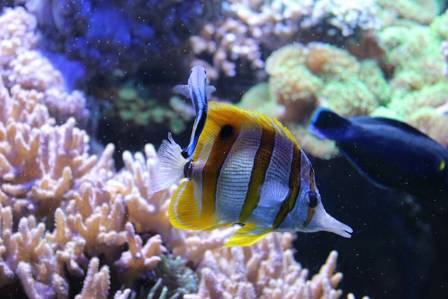
The Copperband Butterflyfish is aptly named for its distinct silhouette and coloration. It possesses a laterally compressed, shield-shaped body and a notably long, slender snout designed for precision feeding. The background color is a pearly silver-white, highlighted by four vertical bands of vibrant yellow-orange, each outlined in stark black and white.
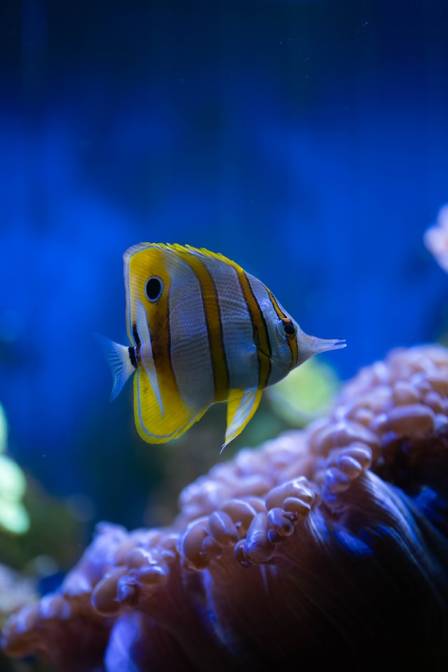
One of its most defining features is the prominent "false eye"—a large, bluish-white ocellus (eyespot) located at the base of the dorsal fin. This spot is significantly larger than the fish’s actual eye, a detail that plays a critical role in its defense mechanism. Juveniles mirror the adults in pattern but display more intense striping and a comparatively larger false eye. While they can reach a total length of 20 cm in the wild, they rarely exceed 14 cm in captivity, with a maximum recorded lifespan of 10 years in nature and approximately 4 years in an aquarium setting.
Behavior and Diet
Generally peaceful, the Copperband Butterflyfish is a semi-aggressive territorial species, particularly toward other members of the Chelmon genus. They are typically observed swimming alone or in monogamous pairs, though juveniles are solitary and prefer shallow waters. Despite being active swimmers, they often retreat into rocky crevices to remain motionless when threatened.
Their specialized snout acts as a built-in probe, allowing them to extract prey from tight spaces. They are obligate carnivores, feeding primarily on:
-
Polychaete worms
-
Aiptasia anemones (making them a valuable "clean-up crew" in reef tanks)
-
Mollusks and crustaceans
Spawning occurs just below the water's surface, where females release buoyant eggs that drift with the currents. The resulting larvae are planktonic, drifting until they mature.
The Art of Deception: Mimicry
To evade predators, the Copperband Butterflyfish employs a classic form of Batesian mimicry. Because most predators instinctively strike at the head of their prey to disable it quickly, the Copperband uses its false eye to create confusion. By presenting a larger, more conspicuous "eye" at the rear of its body, the fish encourages attackers to target its tail end. If a predator lunges at the false eye, the fish has a much higher chance of escaping with minor injuries, as the attack misses its vital organs. This strategy is shared by various other fish species, including the freshwater Oscar.
The Aquarium Trade
Highly prized for its beauty, the Copperband Butterflyfish is a common sight in the ornamental fish trade. However, it is not recommended for novice aquarists due to its specific dietary needs and sensitivity to water conditions. Specimens are primarily exported from the Philippines, Indonesia, and Australia. Notably, Australian-sourced individuals are often more expensive—sometimes double the price—because they are considered hardier and better adapted to captive environments, likely due to more sustainable collection methods.
Nearby stops
 STOP
· en
Three Must-Know Tips for Visiting Marina Bay Sands in Singapore
Marina
 STOP
· en
Europe’s Best-Preserved Towns
Della Whitmore
 STOP
· en
Shelf storage ideas: maximize space with style
Sarah Holden
 STOP
· en
7 Secrets to Baking Incredibly Moist Cakes Every Time
Taylor
 STOP
· en
10 Epic Coastal Cliffs
Cleo Harper
 STOP
· en
7 relaxing colors and how they affect your mood!
Sofia Adams