Dispatch
Discover the Magic of Atolls and How These Natural Coral Rings Form in Our Oceans
An atoll represents one of the most stunning and extraordinary geological structures found on our planet. These unique maritime entities are circular coral reefs that completely encircle a central body of water where a massive volcanic landmass once stood proudly. These dynamic geological features beautifully showcase the incredible endurance and adaptability of marine ecosystems across millions of years of earth history. These structures develop through an incredibly slow timeline that blends intense volcanic eruptions, continuous marine growth, and the gradual sinking of oceanic islands. Beyond their sheer beauty, they offer vital sanctuaries for a vast array of marine organisms, even though they present difficult living conditions marked by scarce terrestrial space and limited natural assets. Today, the modern perils of global climate shifts and rising sea levels present severe threats to the communities and ecosystems that call these structures home, making active marine restoration more critical than ever before. Historically, the fundamental mechanics behind this long-term geological transformation were first accurately proposed by Charles Darwin in the mid-nineteenth century, establishing a theory that remains the cornerstone of modern marine geology.
Eva Harrison
Rider
Desk note
Full dispatch and transfer tips sit below.
Line
Blue Line Walk
An atoll represents one of the most stunning and extraordinary geological structures found on our planet. These unique maritime entities are circular coral reefs that completely encircle a central body of water where a massive volcanic landmass once stood proudly. These dynamic geological features beautifully showcase the incredible endurance and adaptability of marine ecosystems across millions of years of earth history. These structures develop through an incredibly slow timeline that blends intense volcanic eruptions, continuous marine growth, and the gradual sinking of oceanic islands. Beyond their sheer beauty, they offer vital sanctuaries for a vast array of marine organisms, even though they present difficult living conditions marked by scarce terrestrial space and limited natural assets. Today, the modern perils of global climate shifts and rising sea levels present severe threats to the communities and ecosystems that call these structures home, making active marine restoration more critical than ever before. Historically, the fundamental mechanics behind this long-term geological transformation were first accurately proposed by Charles Darwin in the mid-nineteenth century, establishing a theory that remains the cornerstone of modern marine geology.
The Majestic Concept of the Marine Living Ring
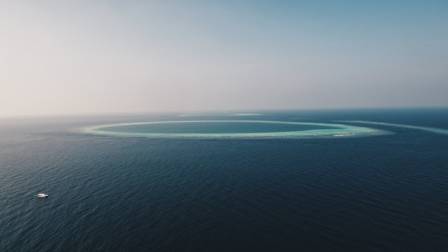
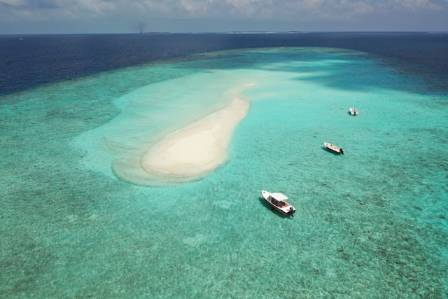
An atoll is fundamentally a circular reef network that frequently incorporates an array of tiny sandy islets surrounding a protected interior basin where a primitive volcano once existed. These astonishing natural architecture projects create some of the most visually breathtaking landscapes across the globe, featuring thriving marine life zones that closely clasp a peaceful and shallow body of coastal water. When observed from a high aerial perspective, these formations resemble flawless bands or semi-circular geometric shapes decorated with slender strips of pale sand beaches and lush tropical flora. This imagery generates a marvelous aesthetic contrast against the profound dark indigo of the surrounding open ocean and the much lighter shades of turquoise within the sheltered aquatic sanctuary.
The actual terminology used to describe these formations traces back to an indigenous Maldivian word that reflects their incredible prevalence throughout the Indian Ocean, particularly within the massive archipelago of the Maldives where they serve as the literal physical foundation of the entire sovereign territory. These unique features play indispensable roles in maintaining global marine biodiversity, shaping the distinct traditions of oceanic island societies, and serving as critical indicators for monitoring global environmental alterations.
Born From Flame and Volcanic Foundations
The historical timeline of a typical atoll tells a mesmerizing geological tale defined by an intricate balance between immense underground volcanic pressures, organic marine development, and the relentless gravitational pull operating across millions of years. This evolutionary progression follows a highly structured timeline that was first accurately detailed in the year 1842 by Charles Darwin, who formulated the subsidence model that continues to guide scientific consensus today. Every circular marine reef initiates its lifecycle through a massive volcanic eruption breaking through the deep ocean floor. This intense subterranean activity gradually accumulates layers of hardened basalt to form an emerging island, which ultimately provides the essential hard substrate required for marine organisms to colonize the area.
These distinct oceanic islands commonly emerge in expansive linear sequences as tectonic plates slowly glide over stationary thermal hotspots hidden deep within the mantle of the earth. Classic examples of this phenomenon can be observed in the remote chains of the Pacific Ocean, where different islands showcase varying phases of this exact evolutionary pathway along a singular volcanic line. While the youngest islands in the chain continue to expand through active volcanic discharges, the older landmasses eventually become completely dormant, providing a stable platform for the subsequent establishment of marine coral systems. Once this volcanic discharge stops and the landmass achieves stability, microscopic free-swimming larvae drifting along oceanic currents attach themselves to the underwater flanks of the mountain and begin multiplying.
As vast periods of time pass, the immense physical weight of the volcanic island causes it to slowly compress the underlying oceanic crust, initiating a very gradual sinking process known to modern geologists as crustal subsidence. While the mountain slowly descends, the living marine colony continuously grows upward toward vital solar radiation, successfully maintaining its position right at the ocean surface. Eventually, a broad body of water opens up between the descending mountain peak and the outward-growing reef structure, creating a defined barrier reef system separated from the central landmass by a shallow waterway. In the absolute final phase of this process, the original volcanic peak submerges entirely beneath the waves, leaving behind nothing but the circular network of living reef surrounding a central body of water, which constitutes the true atoll. This complete geological transformation generally requires anywhere from one million to thirty million years to reach fulfillment, depending heavily on localized coral reproduction speeds and the specific velocity of the sinking landmass. Modern scientific endeavors have thoroughly validated this historic theory through deep crustal drilling operations that successfully extracted ancient volcanic basalt directly beneath thick layers of marine limestone at depths that perfectly match early predictions.
The Constant Wearing Down of Oceanic Mountains
While the slow sinking of the oceanic crust serves as the primary mechanism driving this marine transformation, the forces of physical erosion also play a major role in shaping the landscape. As an ancient volcanic landmass gets progressively older, a variety of natural elements work in tandem to steadily dismantle its structural integrity. Atmospheric weathering through heavy tropical downpours, persistent winds, and shifting thermal conditions continuously fractures the solid volcanic rock. Concurrently, freshwater erosion from developing streams and rivers transports vast quantities of terrestrial sediment down from elevated peaks toward the coastlines.
The relentless action of powerful ocean waves consistently batters the exposed shores, systematically undermining coastal cliffs and wearing away the land. Furthermore, complex chemical interactions occur as the volcanic minerals react continuously with ambient water and the atmosphere, significantly softening the core matrix of the mountain. Together, these interconnected environmental forces systematically diminish the overall height and total mass of the island while simultaneously expanding a shallow underwater plateau around its perimeter. As the visible mountain erodes away into the sea, the surrounding marine reef persists in its upward trajectory, eventually culminating in the iconic ring-shaped architecture that defines these environments.
In specific scenarios, particularly within geographical zones characterized by sudden and dramatic fluctuations in global sea levels, a volcanic island might experience rapid erosion that cuts it down below the ocean surface without experiencing significant structural sinking. Nevertheless, the vast majority of classic circular reefs scattered across the Pacific Ocean developed primarily through the slow crustal sinking process, with physical surface erosion acting as an important secondary influence.
The Structural Perfection of the Coral Ring
The remarkably symmetrical circular geometry of these formations has captivated the minds of naturalists and international adventurers for hundreds of years. This circular or oval architectural layout occurs naturally because marine organisms tend to grow with equal vigor along the entire underwater perimeter of a stabilizing volcanic mountain. As the central mountain slowly descends into the sea, the outer marine colony keeps extending upward in a uniform circular configuration, eventually generating the flawless marine ring that serves as the definitive hallmark of an atoll.
The complete anatomical layout of a fully formed atoll incorporates several fundamental structural elements, starting with the primary reef rim, which represents the dominant ring-shaped marine structure that manages to break through the ocean surface. Directly adjacent sits the reef flat, which functions as a relatively level underwater platform that faces complete atmospheric exposure during low tide cycles. Encircling the interior is the lagoon, which constitutes the central body of sheltered water isolated by the outer reef defenses. Vacationers and scientists also find small terrestrial islands, sometimes referred to as motus, which consist of narrow strips of dry land formed entirely by the long-term accumulation of crushed marine sediments and shell fragments. Finally, the structure includes narrow maritime channels, occasionally called hoa, which represent distinct fractures in the reef rim that facilitate the constant exchange of water between the interior basin and the open sea.
These circular formations exhibit immense variation regarding their overall scale, ranging from miniature rings spanning only a handful of kilometers in width to colossal oceanic networks. A prime example of this immense scale is the Kwajalein Atoll situated within the Marshall Islands, which boasts a massive central basin extending across a length of over ninety-seven kilometers. The overall depth of these interior basins reflects a similar diversity, ranging from shallow aquatic floors to remarkably deep oceanic depressions that drop well beyond fifty meters. When viewed from outer space, these circular marine networks resemble near-perfect geometric shapes dotting the vast blue oceans, their flawless symmetry standing as an enduring testament to the balanced forces of nature.
The Living Foundations of the Marine Structure
At the absolute core of every single atoll lies a vibrant and highly complex coral reef ecosystem. These immense living monuments are meticulously engineered by tiny colonial organisms known to science as hermatypic corals, which represent the specialized reef-building varieties that form the fundamental backbone of marine ecosystems across the globe. Unlike their flexible and soft-bodied relatives, these hard corals possess the unique capacity to constantly excrete durable calcium carbonate skeletons. Over the course of thousands of years, these rigid secretions accumulate layer upon layer, ultimately consolidating into the massive underwater fortresses that humanity recognizes as coral reefs.
These tiny organisms survive and prosper by maintaining an intimate symbiotic relationship with microscopic photosynthetic algae known as zooxanthellae. These single-celled organisms reside directly within the cellular tissues of the coral polyps, providing vital energy and nutritional compounds derived from sunlight, while receiving a highly secure habitat and essential metabolic byproducts in return. This highly efficient biological partnership allows hard corals to grow and flourish even within the notoriously nutrient-deficient waters that typically characterize tropical oceanic zones, effectively laying down the primary biological framework for some of the most biodiverse marine communities on our planet.
The Unique Environments Shielded by the Ring
The protective ring of the outer reef shelters a unique body of calm water that serves as the heart of the atoll. These enclosed basins represent highly specialized marine environments possessing ecological characteristics that differ drastically from both the turbulent open ocean and standard coastal coastlines. These interior basins vary immensely in terms of their total geographic area, overall depth, and chemical attributes. While certain examples are relatively shallow and feature smooth sandy floors, others drop to extraordinary depths and contain highly intricate underwater topographies. The highly protected setting creates an exceptionally calm aquatic zone characterized by minimal wave energy, which allows for the long-term evolution of diverse biological communities that could never survive along the high-energy outer reef crest that constantly battles the open sea.
The water contained within these sheltered basins generally exhibits distinct physical properties. It regularly maintains higher thermal temperatures than the surrounding open ocean waters due to prolonged solar exposure in shallow areas. It also showcases fluctuating salinity parameters resulting from intense tropical evaporation combined with localized freshwater rainfall inputs. Furthermore, it develops highly unique aquatic circulation patterns driven by daily tidal forces pushing water through the narrow reef channels, alongside a distinct water chemistry shaped continuously by the metabolic processes of the surrounding living reef.
These specialized environmental conditions generate a series of unique microhabitats that comfortably accommodate highly specialized communities of marine wildlife. Extensive meadows of underwater seagrass commonly flourish across the sandy floors of the basin, offering a vital nursery habitat for a multitude of juvenile fish species. Additionally, isolated coral formations known as patch reefs frequently dot the interior landscape, adding another layer of structural complexity to the underwater habitat. For indigenous island communities, these enclosed basins represent an indispensable natural asset, functioning as protected harvesting grounds, safe anchorages for maritime vessels, and resilient natural barriers against destructive storm surges and devastating tsunami waves. This vital protective capacity explains why these formations, despite their incredibly scarce terrestrial landmass and challenging environmental resources, have successfully sustained human civilizations for thousands of years.
The True Identity of the Enclosed Waters
The specialized body of water encircled by the coral ring carries the straightforward and evocative name of a lagoon, a term tracing its linguistic roots back to an old Italian word that references a shallow aquatic zone isolated from the open sea. These lagoons constitute one of the most defining geographical markers of atoll systems, serving as the literal blue heart of these extraordinary marine networks. These interior basins maintain a constant relationship with the surrounding open ocean through a series of deep channels or natural passes that pierce the outer reef rim, facilitating a continuous exchange of water during shifting tidal cycles. The overall dimensions and frequency of these channels exert a profound influence over the internal water circulation, directly affecting critical parameters ranging from water temperature and salt concentrations to overall nutrient distribution and the movement of marine life.
Throughout maritime history, seasoned navigators have highly valued these enclosed basins as exceptional natural harbors that offer reliable sanctuary from heavy ocean swells and intense offshore tempests. This unique structural feature caused these formations to assume immense strategic importance during major global conflicts such as World War II, during which numerous islands across the Pacific were quickly converted into vital naval and military outposts. Most notably, the remote Bikini Atoll situated within the Marshall Islands later became the primary testing site for advanced nuclear weapons, including the historic detonation of the first hydrogen bomb in the early nineteen-fifties, an event that left a profound and lasting environmental scar on the local ecosystem that researchers continue to track today.
For modern marine scientists, these sheltered lagoons function as invaluable natural laboratories, offering highly distinct aquatic environments with clear geographical boundaries where complex ecological processes can be studied in relative isolation. Their enclosed architecture makes them uniquely beneficial for understanding exactly how sensitive coral systems adapt and respond to shifting environmental pressures, including the escalating modern hazards associated with global climate change.
Fragile Edens Confronting Modern Hazards
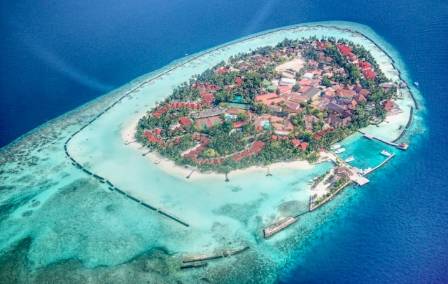
Despite their breathtaking aesthetic beauty, these circular marine networks rank among the most fragile and threatened ecosystems existing on Earth today. Their ongoing survival depends entirely on a highly precarious balance of geological and biological forces that can be easily disrupted by modern human industrialization and rapid environmental transformations. The most immediate and existential hazard stems directly from the accelerating rise in global sea levels driven by human-induced climate change. Because the vast majority of these low-lying islands rise only a few short meters above the ocean surface, even minor increases in global water levels threaten to submerge these terrestrial habitats completely. Sovereign nations such as the Maldives, Kiribati, Tuvalu, and the Marshall Islands, which are built almost exclusively upon these coral formations, face the terrifyingly realistic prospect of becoming entirely uninhabitable within the span of a few short decades.
Beyond the threat of rising waters, these unique environments must contend with a multitude of interconnected challenges. Escalating ocean temperatures frequently trigger widespread coral bleaching events that destroy the living architecture of the reef. Ongoing ocean acidification systematically weakens the calcium carbonate skeletons of the organisms and drastically slows down the rate of reef expansion. Terrestrial communities must deal with an extreme scarcity of accessible fresh water, often relying entirely on basic rainwater harvesting systems.
Furthermore, poor local soil quality severely restricts traditional agricultural practices, which compromises regional food security. The distinct lack of diverse natural resources leaves communities with few building materials or avenues for economic diversification, while an incredibly limited land area creates intense population pressures on highly sensitive island environments. Finally, waste management represents a critical dilemma due to the severely confined geographic space and the highly porous nature of the underlying coral substrate. These compounding hazards render atoll societies uniquely vulnerable to environmental shocks while severely restricting their natural capacity to adapt, forcing many island nations to become the leading diplomatic voices in international climate summits as they advocate for aggressive global emissions reductions to guarantee their literal survival.
The Geographic Placement of Nature’s Rings
These circular marine formations are by no means distributed evenly across the oceans of the world, but instead cluster within highly specific geographical zones that provide the exact combination of thermal conditions and geological foundations required for their development. The overwhelming majority of these structures are concentrated within the warm tropical waters of the Pacific and Indian Oceans, with only a small handful appearing in the Caribbean Sea. The Pacific Ocean claims the absolute highest density of these formations, particularly within the Marshall Islands, which host numerous prominent networks including the largest atoll in the world when measured by total lagoon area. Another significant concentration is found within the Tuamotu Archipelago located in French Polynesia, which stands as the longest continuous chain of atolls on the globe. The Caroline Islands represent another major hub, featuring specific historic locations famous for their preserved wartime shipwrecks, while the remote Line Islands sit isolated across the equator in the central Pacific.
The Indian Ocean contains fewer total structures but boasts some of the most famous formations on Earth, most notably the entire nation of the Maldives, which is a sovereign country constructed entirely from these circular reefs and low-lying coral islands. The region also hosts the Chagos Archipelago, which includes an immense underwater bank that ranks as the largest atoll structure on Earth by total geographic area, alongside the Seychelles, which contain prominent formations that serve as a vital sanctuary for rare giant tortoises.
In stark contrast, authentic atolls are exceptionally rare throughout the Atlantic Ocean due to vastly different tectonic histories and distinct native coral species. While the Caribbean Sea features a few structural formations that superficially resemble these rings, such as a famous reef system located off the coast of Belize, these exceptions typically developed through alternative geological mechanisms rather than the classic volcanic sinking process observed in the Pacific. The absolute northernmost example of a true atoll is Kure Atoll situated within the Hawaiian island chain, positioned right at the edge of what marine researchers define as the Darwin Point, which represents the precise geographical boundary beyond which cold water temperatures prevent coral growth from keeping pace with natural erosion and structural sinking, making atoll formation impossible.
Modern Preservation Struggles and Ecological Restoration
The highly specialized ecosystems found within these marine rings are currently facing unprecedented modern hazards that demand highly innovative conservation strategies. Rapidly rising sea levels, an increase in the frequency and intensity of severe tropical storms, and devastating coral bleaching events driven by warming oceans are placing immense stress on these fragile systems. For the populations residing within these isolated island nations, these environmental crises are not distant or abstract concepts, but rather immediate and existential threats to their physical homes, economies, and ancient cultural legacies. Implementing traditional environmental conservation methodologies often proves exceptionally difficult on these remote islands due to their extreme geographic isolation, severe land constraints, and limited economic funding.
Despite these hurdles, several highly promising management strategies have recently emerged to combat the crisis. The establishment of expansive Marine Protected Areas creates secure zones where commercial fishing and other destructive extractive activities are strictly prohibited. Active reef restoration initiatives focus on manually rebuilding fractured or damaged coral frameworks to enhance the overall structural resilience of the environment. Comprehensive climate adaptation blueprints are helping local communities prepare for inevitable environmental shifts, while sustainable ecotourism models are designed to generate vital economic revenue while minimizing the human footprint on fragile ecosystems.
Forward-thinking environmental organizations are currently pioneering cutting-edge coral restoration methodologies to aid these systems. By cultivating climate-resilient coral strains using advanced land-based aquaculture technology and subsequently transplanting these robust specimens onto degraded reef networks, these initiatives offer genuine hope for reinforcing the living protective infrastructure that makes human life on an atoll possible. Achieving successful long-term conservation requires a fundamental acknowledgement of the deeply interconnected nature of these environments, recognizing that the terrestrial land, the interior lagoon, and the outer marine reef function seamlessly as a single integrated system. This holistic management perspective, which frequently aligns perfectly with the traditional ecological wisdom passed down through generations of island inhabitants, offers the most viable pathway forward for ensuring these natural masterpieces survive for future generations to come.
The Long Term Outlook for Earth’s Coral Rings
These circular marine formations remain some of the most awe-inspiring and extraordinary natural masterpieces found anywhere on our planet, serving as living monuments to the epic interplay between macro geological shifts and resilient biological adaptation operating across vast expanses of deep time. From their violent beginnings as active underwater volcanoes to their current manifestation as elegant coral rings embracing peaceful lagoons, they tell one of the most compelling stories of transformation found in the natural world. Looking ahead into the coming century, these fragile ecosystems face a gauntlet of unprecedented human-induced challenges ranging from rapid atmospheric warming to severe ocean acidification. Their ultimate survival depends entirely on the presence of vibrant, healthy coral communities capable of growing upward at a speed that matches or exceeds the rate of rising sea levels, a biological race that many formations may ultimately lose unless aggressive global action is taken to mitigate global climate change.
Yet these unique marine formations and the resilient human communities that inhabit them have confronted and adapted to monumental shifts throughout history. By embracing innovative ecological conservation practices, implementing sustainable regional development models, and deploying cutting-edge marine restoration technologies, these irreplaceable ecosystems can find a way to endure. Their long-term destiny is inextricably bound to humanity's broader relationship with the oceans and the biosphere as a whole, an interaction that must rapidly evolve toward genuine responsibility and global stewardship. The million-year journey of the atoll reminds us of nature's astounding capacity for resilience and reinvention, and how the next chapter of that story unfolds depends entirely on the commitments humanity makes today to protect these living wonders.
Nearby stops
 STOP
· en
The Biggest Palaces Ever Built
Briar Lennox
 STOP
· en
Skydiving Then and Now: From Brave Beginnings to Modern Thrills
Mary Johnson
 STOP
· en
The Most Epic Road Trips in the World: A Traveler’s Driving Guide
Daniel Lee
 STOP
· en
7 Sofa Dressing Tips to Create a Stunning Living Room
Lily
 STOP
· en
Understanding Nighttime Hunger and Sleep Quality
Louis Wood
 STOP
· en
The 10 Most Beautiful Aircraft Ever Built
Evander Wynne