Dispatch
Flamingos are Tougher Than They Look
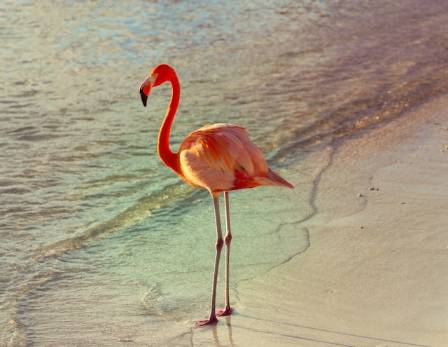
Flamingos may look graceful and fragile with their bright pink feathers, and they are often linked with warm tropical coastlines. However, their natural habitats can be surprisingly harsh and even dangerous for many other creatures. There are six recognized flamingo species, and each has developed special adaptations that allow it to survive in challenging environments across the globe.
Aiden Blake
Rider
Desk note
Full dispatch and transfer tips sit below.
Line
Blue Line Walk
Flamingos may look graceful and fragile with their bright pink feathers, and they are often linked with warm tropical coastlines. However, their natural habitats can be surprisingly harsh and even dangerous for many other creatures. There are six recognized flamingo species, and each has developed special adaptations that allow it to survive in challenging environments across the globe.
Greater Flamingo and Salty Waters
Flamingos are well known for their ability to survive in places with high levels of salt. The Greater flamingo, which is the largest of the six species, is an excellent example of this remarkable adaptability.
These birds inhabit coastal lagoons, salt flats, estuaries, and other saline environments throughout parts of Europe, Asia, and Africa. Their uniquely shaped bills allow them to filter tiny crustaceans, algae, insects, and other food particles from salty water. This feeding strategy gives them access to resources that many other animals cannot easily use.
Lesser Flamingos in Alkaline Lakes
The Lesser flamingo has adapted to some of the most chemically extreme lakes on Earth. They are commonly found around the soda-rich and highly alkaline lakes of eastern and southern Africa.
Some of these lakes are so alkaline that prolonged contact can injure or burn other animals. Tanzania's Lake Natron, for example, has a pH level that can approach the alkalinity of household bleach. Lesser flamingos, however, have tough skin and specialized scales covering their legs that help protect them from the harsh water.
The connection between these birds and Lake Natron is particularly remarkable. Around 75 percent of the entire Lesser flamingo population is believed to have been born at this lake, demonstrating just how well suited the species is to its unusual environment.
Flamingos of South America
South America is home to three flamingo species: the Chilean flamingo, Andean flamingo, and James's flamingo.
Chilean and James's flamingos commonly inhabit brackish lagoons, saltwater wetlands, and salt flats in isolated areas. These remote habitats provide the birds with suitable feeding and breeding conditions while limiting competition from other animals.
Andean flamingos have taken adaptation even further by living around extremely high-elevation saline lakes and wetlands in the Andes Mountains. Conditions there can be extraordinarily cold. At some locations, temperatures fall low enough overnight for the surface water to freeze.
When this happens, flamingos may become temporarily trapped because ice forms around their legs. They must wait until sunlight returns and melts the ice before they can move freely again.
Their bodies have an efficient system for dealing with the cold. Blood flowing upward from the feet is warmed by warmer blood traveling downward from the body. This heat exchange helps reduce energy loss and allows the birds to survive in freezing mountain environments.
American Flamingos and Their Water Adaptations
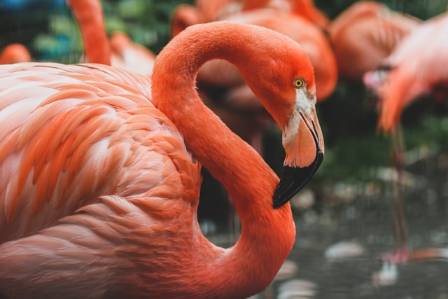
The American flamingo is the only flamingo species naturally occurring in the United States. Its range includes southern Florida and large parts of the Caribbean.
Although they are mainly associated with these warmer regions, American flamingos have occasionally been observed much farther north. Following a powerful storm, for example, some individuals have been recorded as far north as Wisconsin.
Flamingos also have an impressive ability to obtain water under difficult conditions. When freshwater is unavailable, they can consume seawater and remove the excess salt through specialized structures associated with their nasal passages.
Their tolerance for extreme water conditions is even more impressive because flamingos can drink extremely hot water near geysers, giving them access to water sources that would be unsuitable for most other animals.
How Flamingos Survive Extreme Environments
Across their global range, flamingos have evolved an extraordinary collection of adaptations that allow them to live in some of Earth's most unusual environments. They can tolerate high concentrations of salt, extremely alkaline water, freezing temperatures, and even exceptionally hot water.
However, the very environments that make these birds so fascinating are also particularly vulnerable to human disturbance. Changes to water supplies, pollution, habitat destruction, and other human activities can threaten the specialized ecosystems on which flamingos depend.
Protecting saline lakes, wetlands, lagoons, salt flats, and coastal habitats is therefore essential for the future of these remarkable pink birds. Their survival depends not only on their own extraordinary adaptations, but also on our ability to preserve the fragile environments they call home.
Nearby stops
 STOP
· en
Discover the Magic of Atolls and How These Natural Coral Rings Form in Our Oceans
Eva Harrison
 STOP
· en
The Most Famous Sphinx: Mystery, Myth, and the Giza Colossus
Steve Clark
 STOP
· en
Nature’s Optical Illusion: The Copperband Butterflyfish
Henry Jackson
 STOP
· en
The Most Renowned Still Life Artworks of All Time
Edward
 STOP
· en
First 7 Star Hotel in the World: Burj Al Arab
Mary
 STOP
· en
The Versatile World of Box Robots: Design, Engineering, and Practical Uses
Victor Julian Ashford